by cecr | Jul 14, 2020 | Construction Chemicals And Materials
|
Nandan Pradhan
Executive Director,
Mcon Rasavan Pvt. Ltd. |
Leakages, dampness or moisture can prove very damaging to any construction. Countless money can get wasted due to unexpected seepage of water into walls or woodwork. Sometimes the presence of moisture can even corrode the steel framework, placing the whole structure at risk. In order to safeguard precious construction and also avoid future inconvenience, it is highly important to take strict measures to waterproof your house. Any building structure waterproofing has a major challenge in the areas of terraces and podiums, which are directly taking the wrath of the weather and the extremes of Indian climate.
The new age liquid membrane when combined with a strong reinforcement gives a fantastic combination of the following characteristics:
- Breathability
- Elongation
- Bonding to the Substrate
- Tear Resistance
- UV Stability
- Abrasion Resistance
Mcon Magic Coat PU is a Pure Polyurethane based liquid membrane which can be applied by brush, roller or spray to give you a tough membrane having the above mentioned characteristics.
But, are these above mentioned characteristics so important for a Waterproofing System? Well let’s study each of them below:1.Breathability: When you do a waterproofing coating or membrane application, then there are all the chances that air gets entrapped inside the coating. Over a period of time these air bubbles or water vapour tries to escape the surface due to change in temperature. Breathable membranes help to release that water to the air in the form of water vapour. This mechanism works just like our skin.
2.Elongation: This is the ability of the membrane to stretch, which is measured in percentages. An elongation of 150% means that the membrane can stretch to 1.5 times its length when pulled. Elongation is a must in buildings that will move, such as high-rise buildings, or buildings made with steel, which is flexible. This property will allow the membrane to stretch over cracks that may develop in the future. Mcon Magic Coat PU has an Elongation of 400% which makes it a unique feature.
3.Bonding to the Substrate: What good is a membrane or a coating which gets peeled off over a period of time? Mcon Magic Coat PU has this high bond strength with most of the building material such as concrete, cemented surfaces, china chips, tiles and also other deteriorated membranes. With a pull out strength of more than 2 MPa, this product can boast of providing long life waterproofing to the structure.
4.Tear Resistance: This is an important property, as many membranes that have good elongation also can tear easily. Take a small applied sample of the material in your hand, and try and tear it into two pieces. This gives a fair idea of its tear resistance. You are looking for a membrane that will not tear even if a reasonable force is exerted on it. Mcon Magic Coat PU has an excellent tear resistance and when it’s applied along with reinforcement of Geo-textile, then the strength of an Elephant to tear it apart is required.
5.UV Stability: If the membrane is to be exposed to the sun, then it must be UV stable or UV resistant, else it will degrade over time. If the membrane is not UV stable then it is important and compulsory to cover it with some screed or UV resistant coating. Mcon Magic Coat PU is a UV resistant liquid membrane and hence can be coated and left exposed to the sunlight.
- Abrasion Resistance: This is the ability of a membrane to withstand wear and tear. As most membranes are covered with concrete screeds and tiling, the abrasion resistance comes into play during the construction period, when workers are walking on the surface, dropping nails and screws, and scraping hard objects like rebar against the membrane, which can damage it. A very soft membrane with low abrasion resistance may get damaged in such a situation, which can cause it to leak. Also during the waterproofing repairs especially pre-monsoon stage, you can leave an abrasion resistant coating exposed to foot traffic which is again helping Mcon Magic Coat PU to attend the Express Waterproofing Needs.
So, waterproofing system is unique in its own way, but the above mentioned features are a must for the solid performance of a liquid membrane.
For further information,
visit: www.mconrasayan.com
by cecr | Jul 14, 2020 | Construction Chemicals And Materials
The PURTOP range is a series of continuous, one/two component, polyurea-based membranes without solvents. These are suitable for application on various types of substrate.
Membranes from the PURTOP range are formed by means of a highly reactive, solvent-free chemical reaction. This reaction ensures that, once the two components come into contact with the substrate, they create a waterproofing membrane in just a few seconds.
PURTOP membranes set to foot traffic and become waterproof immediately, and within a very short space of time, they develop their full performance characteristics.
Exceptional mechanical properties, elongation at failure of more than 300% and excellent resistance to aggressive agents are just some of the certified characteristics of this product. PURTOP membranes also carry CE marking as being compliant with EN 1504-2 (“Concrete surface protection systems
PURTOP membranes are the result of research work carried out in the Mapei R&D laboratories and are manufactured in the Mapei facilities around the world in compliance with the most stringent safety standards and the most severe testing protocols regarding environmental sustainability.
It is a well-known fact that, in urban areas, the local temperature rises due to the high density of buildings and traffic; the fewer or total lack of green areas, parks and open spaces help mitigate this phenomenon. The technological solution to counteract this phenomenon is based on two types of roof:
- Green Roof – garden roofs that help mitigate the effect of atmospheric pollution while, at the same time, improving the overall appearance of buildings and providing a more pleasant landscape.
- Cool Roof – flat roofs with special high reflectance and high emissivity finishes which, apart from improving the level of comfort inside buildings, help reduce the temperature of the surface of the roof.
Membranes from the PURTOP range may be used to great effect on both types of roof, as they are certified as being resistant to root penetration (in compliance with the European Standard CEN/TS 14416).
Benefits Of PURTOP Range Membranes
- Suitable for all types of surfaces – horizontal, vertical, curved, ceilings
- Quick reaction times (just a few seconds)
- Immediate waterproofing and set to light foot traffic
- Coloured finish, available in all RAL colours
- Products certified according to the most severe standards
- Excellent mechanical properties and resistance to abrasion
- Excellent static and dynamic crack-bridging capacity, including at low temperatures
- Good resistance to aggressive chemicals suitable for repairing existing structures and for new waterproofing system
- Attractive finish
- Easy to maintain
PURTOP Range
- PURTOP Easy: One-component elastic polyurethane waterproofing membrane
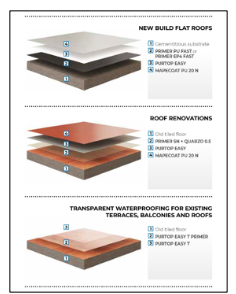
- PURTOP EASY T: one-component transparent polyurethane membrane that gives flat roofs a new lease of life without altering their attractive finish
- PURTOP 400 M: Waterproofing membrane for large flat roofs and bridge decks
- PURTOP 600: Suitable for application on horizontal, sloping, and curved surfaces, not subject to traffic, on civil and industrial buildings
- PURTOP 1000: Waterproofing membrane to storage tanks, basins, and hydraulic structures in general, as well as any structure requiring protection with a high-performance membrane.
- PURTOP HA: Waterproofing membrane for small to medium size terraces and flat roofs, and for repairing surfaces waterproofed with hybrid polyurea and/or pure polyurea-based membranes
PURTOP EASY is a range of ready-to-use polyurethane products by Mapei for waterproofing balconies and terraces with just one single coat.
The high elasticity and excellent bond-strength to substrates of these products make them ideal for both new builds and old floors, rapidly guaranteeing a perfect waterproofing solution.
Their versatility also allows each installer to choose their preferred application method – with a trowel, roller, or by spray.
PURTOP EASY is a one-component, ready-mixed polyurethane membrane for waterproofing balconies, terraces, and flat roofs quickly and simply.
Benefits Of PURTOP EASY
- Fully impermeable
- ETAG 005 certified system
- Resistant to root penetration
- Resistant to ponding water
- Resistant to foot traffic
- Excellent and full adhesion to substrates
- Resistant to low to high temperature (-20oC to +80oC)
- Resistant to UV Rays
- CE Marked membranes
Application Of PURTOP Easy System
For further information,
visit: www.mapei.co.in
by cecr | Jul 14, 2020 | Construction Chemicals And Materials
The aim of waterproofing is to restrict unwanted water from entering the built environment. FAIRMATE provides full range of technologies and solutions for waterproofing of structures like coating systems, membrane systems, integral waterproofing compounds, impregnations and grouting. Fairmate’s two utmost products, which are giving excellent performance and combined with new technologies, are discussed here.
WATERGUARD LIQUID MEMBRANE is polymer modified bitumen based, fibre reinforced, liquid applied, flexible waterproofing membrane. This is a single component high performance waterproofing membrane with high elasticity and low water permeability. Further, the membrane complies with ASTM C 836- 84.
In addition to bitumen and polymer, WATERGUARD LIQUID MEMBRANE also contains fibres, which improve the properties of coating system. These fibres enhance the crack resistance property, tensile strength and abrasion resistance of the coating. WATERGUARD LIQUID MEMBRANE has several benefits, including resistance to ground salts, very low water permeability, high elasticity, tightness to structure, among others.
This membrane is particularly suitable for a wide range of applications, including wet areas, foundations, basements, terraces, retaining walls, bridge abutments, planters, etc.
The second excellent waterproofing solution, WATERGUARD MAGIC, is onetime and lifetime waterproofing of the concrete with no further maintenance cost. It is a biochemically modified waterproofing solution, which waterproofs the concrete for its entire useful life. Once it is applied to cementitious concrete, the structure never leaks, the steel never rusts, although attack from the underside of such untreated areas may occur. WATERGUARD MAGIC treated areas permanently eradicate concrete spalling whilst preventing freeze/thaw and de-icing salt damage.
Apart from waterproofing, WATERGUARD MAGIC also delivers other tangible construction benefits:
- As it directly penetrates into the concrete and it does not make any film, you will never observe problems like puncture in coating, delamination of coating, etc.
- It penetrates in to the concrete up to 30 mm in concrete slab so it will provide the complete water tightness to the entire substrate.
- Easy application – It can be applied very easy and fast when compared to traditional membrane detailing work.
- No Mechanical Damage – Once applied it cannot be damaged by other trades on site.
- Crack sealing- Permanently seals cracks up to 2 mm
- Value for money product- any waterproofing coating will give protection for 3-5 years but this product is onetime waterproofing.
WATERGUARD MAGIC not only replaces all currently known above grade membrane applications, but of course by default becomes best concrete protection technology. WATERGUARD MAGIC works like a magic in case of waterproofing!!
Remember that Prevention is better than cure!!
For further information,
visit: www.fairmate.com
by cecr | Jul 14, 2020 | Construction Chemicals And Materials
|
Abhishek D. Khupsare
Technical Officer
Bajaj Reinforcement
|
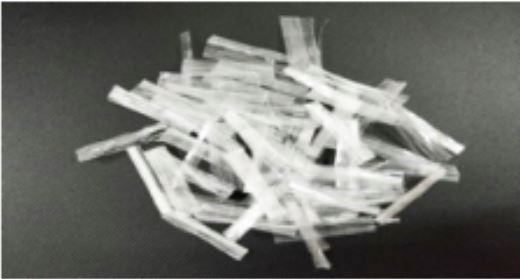
Polypropylene fibres is a micro synthetic reinforcement, designed for use with all cementitious mixes. They are manufactured of 100% polypropylene fibres and contain no reprocessed olefin materials. Polypropylene synthetic fibres are easily available in India.
Polypropylene fibres were first suggested as an admixture to concrete in 1965 for the construction of blast resistant buildings for the US Corps of Engineers. These fibres have subsequently been improved further and at present, they are used either as short discontinuous fibrillated material for production of fibre reinforced concrete, or as a continuous mat for production of thin sheet components. The use of these fibres has increased tremendously in construction of structures because addition of fibres in concrete improves the toughness, flexural strength, tensile strength, impact strength, as well as failure mode of concrete. Further, polypropylene twine is cheap, abundantly available, and like all manmade fibres of a consistent quality.
The polypropylene fibres claim contribution to the concrete performance subjected to crack opening and slippage. Furthermore, the fibres reinforce the performance under not only compression, flexure, and tension, but also under impact blows and plastic shrinkage cracking.
Waterproofing Using Bajaj Fibre Guard
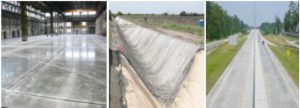
We introduce ourselves as manufacturers of Bajaj Fibre Guard Micro Synthetic Fibrillated Fibres. It can be used effectively in Industrial Flooring, Canal Lining, Metro Concrete Structures, Concrete Roads, Basement Slabs, Dams along with Steel Rebars to enhance tensile performance in comparison to the ordinary RCC. The application of these fibres in construction increased largely because the addition of synthetic Fibrillated fibres in concrete improves the tensile strength, flexural strength, toughness, impact strength. Polypropylene fibres are used in dosage of 0.6-2.5 kg/m3 (IRC:15-2017) for infrastructure projects and precast concrete.
Properties Of Bajaj Fibre Guard
The inclusion of PPF Fibre within a concrete mix or cementitious mixes will control shrinkage cracks. It has been tested for all its major properties as per its standardization by IRC, MORTH and approved Indian engineers, consultant and authorities for use in their projects.
PP Fibres for Waterproofing Coating is chemically surface treated 100% Virgin high tenacity polypropylene fibre based concrete additive and is available in graded lengths for use in water retaining slabs/structures. This is to be used as micro reinforcement at minimum of 0.9 kg/m3 of concrete.
The key actions of Fibre Guard are as follows:
- Increases water proofing ability of concrete (reduces permeability)
- Reduces need to do water proof plaster, pressure grouting
- Reduces shrinkage and plastic cracking in concrete
- Makes the concrete dense and strong
The applications of PP Bajaj Fibres Guard are as follows:
- Roof slabs, wet slabs and toilet floor slabs
- Water retaining structures
- Effluent or sewage treatment tanks
- Gunite and shotcrete
- Warehouse flooring
- Concrete tanks/Canal lining
- Basement waterproofing
- Overlays/toppings
- Plastering
Bajaj Fibre Guard improves the shrinkage cracking behaviour of the concrete by either simply bridging cracks (lower volumes), or increasing the actual tensile strength thereby preventing the cracking (higher volumes).
We have successfully supplied Bajaj Fibre Guard in:
- Nagpur Metro Precast structures
- PWD Maharashtra
- PWD NH Maharashtra
The Bajaj Fibres Guard eliminates shrinkage cracks in concrete. Its addition in concrete improves its mechanical properties. The high tensile strength as a result of Fibre Guard can improve the capacity of the concrete and can control the volume changes with time. It is concluded that inclusion of PP fibres increased split tensile strength by around 20%. Also, the strength enhancement in flexural strength is 24% and modulus of elasticity is 11%, as compared to that of conventional concrete.
For further information,
visit: www.bajajreinforcementsllp.com
by cecr | Jul 14, 2020 | Construction Equipments
The Mobile Screens:
MADE IN INDIA
Manufactured by the WIRTGEN GROUP in India, precisely in the local production and assembly plant in Pune, the mobile screening plants in the MOBISCREEN?EVO line is successful all over the world. The machines are classifying screens; they classify the rock after it has been crushed by KLEEMANN?crushing plants, sorting it up to three aggregate fractions (MS?702?EVO and MS?952?EVO plants with two screen decks), or up to four aggregate fractions (the 703 and 953 plants with three screen decks). Using various screen surfaces, the plants are ideal for a wide range of applications, for instance, classifying granite, basalt, iron ore or limestone. Other highlights of the MOBISCREEN?EVO line includes a large feed hopper with vibration for pre-screening, an easy-to-operate mobile control panel, and a fully automatic process control system.
Top Performance In Open Cast Applications
The screens make a particularly valuable contribution in their ‘home market‘, however, there is hardly another region in the world with a more dynamic road construction industry than India. When constructing roads, it is particularly important to have a supply of crushed aggregate in precisely defined grain sizes.
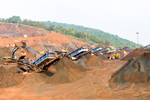
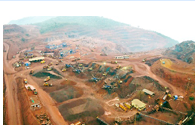
KLEEMANN plants also perform invaluable services in open cast applications. This is being demonstrated by 4 MOBISCREEN?EVO plants of the MS?952?EVO and MS?953?EVO types in Keonjhar, Odisha. KLEEMANN technology is sustainably boosting productivity and efficiency at an iron ore extraction site operated by its customer Kalinga Commercial Corporation Limited (KCCL). “At present, we are operating 4 plants for 18-20 hours a day. And we are getting high production levels from all 4 plants,” says Mr. Shri Kumar, Project Manager at KCCL.
For further information,
visit: http://www.wirtgen-group.com/india