by Sawon Banerjee | Mar 8, 2021 | News
The infrastructure investment trust (InvIT) by NHAI, which is expected to enter the market by the end of this fiscal year, is likely to experience changes to suit the prospective bidders better. The Union government is awaiting approval from the market regulator Securities and Exchange Board of India (SEBI).
The road stretches in the urban regions, which were a portion of the earlier InvIT offering, have been evacuated in the proposal and replaced with the roads in rural areas. One reasoning behind this proposal is that it may attract toll and other revenues, while urban areas generate revenues on their own and therefore may not require funding via the InvIT.
As of now, five operational roads have been identified to be transferred to the InvIT. Placement memorandum is under progress, and the issue may take place in March 2021 to raise expected funds to the tune of `50 billion.
by Sawon Banerjee | Mar 8, 2021 | News
Cement demand in India is expected to increase by 18%-20% in FY2022 over FY2021 with the volumes reaching back to around FY2019-FY2020 levels, amid a strong rural demand including affordable housing and a recovery in the infrastructure segment.
“After a sharp contraction in volumes in FY 2021, ICRA expects it to grow by 18%-20% in FY2022. The rural off take is likely to be supported by the positive farm sentiment with the timely rabi sowing and favorable groundwater and reservoir levels, which are likely to boost rabi yields,” said Anupama Reddy, Assistant Vice President, ICRA.
by Sawon Banerjee | Mar 8, 2021 | News
The move by the government is seen as a step to ensure cost reduction in building of highways using steel.
Union Government announced “All steel to be allowed to be used for highway construction whether produced from ore, billets, pellets or melting of scrap – would be allowed for National Highway construction, as long as it meets the standards required for specific grades of steel.”
“The steel proposed to be used would be tested in NABL-accredited laboratories as a third party check before approval” said the Ministry.
In view of the increase in steel prices, which can impact the cost of building national highways, Union Minister for Road Transport & Highways, Nitin Gadkari had suggested the need to re-look at all conditions which could be restrictive, without impacting the quality of material used for highway construction.
With this step, the supplier base for steel used in the construction of national highways would increase, leading to more competition and better price discovery by the markets. This is also part of the continuous effort by the Minister to reduce costs through use of new technology, reducing restrictions on suppliers and making the procurement system transparent.
by Sawon Banerjee | Feb 15, 2021 | Sponsored Articles
|
Mithilesh Kumar
Director,
Layher Scaffolding Systems Pvt Ltd
|
Layher produces high-quality scaffolding systems in Germany. The company has worldwide presence with more than 40 sales subsidiaries. The products are being used by industries like construction, cement plants, chemical plants, power plants, as well as shipyards and offshore.
More Possibilities – Layher Products and Services
Layher’s present product characteristics and services help customers achieve long-term success and increase the profitability of their companies. The Layher Allround Scaffolding has been established as a synonym for modular scaffolds on the market. The Allround Scaffolding offers unsurpassed versatility to be used in construction sites, chemical industry, power plants, aircraft, shipyards, event sector, theatres and arenas.
Allround scaffolding uses a simple, unique and bolt free connection technology. Sliding the wedge head over the rosette and inserting the wedge into the opening immediately secures the component. There is still sufficient play to secure the other end of the ledger. A hammer blow to the wedge transforms the loose connection into a superbly strong structurally rigid one. The face of the wedge head is now precisely positioned against the standard.
To transfer pulling force, every frame is secured by locking pins or bolts to each other. In this way the tower can be assembled on the ground and placed by crane.
Application Of Layher Allround Scaffold For Tallest Office Building In Slovenia
About 90 metres high, the Crystal Palace soars into the sky. The new building in Ljubljana is the tallest office building in Slovenia. The skyscraper also lives up to its name. Not only has the shape of the building reminded of a crystal, but also the shiny surface of the glass façade. To attach the glass elements on the sloping façade, the building contractor ordered a 90 metres high and approximately 12,000 square metres large work scaffold. The Slovenian scaffolders solved this task technically with the Layher Scaffolding: section by section they adapted the scaffold to the slope of the building with various brackets on the inside and then shifted it inwards by one scaffold width. Lattice beams that were anchored through window openings in the building served as bracing. During the assembly, the customers furthermore decided at short term to mount large-scale advertising banners. By bracing the work scaffolding vertically, with Allround lattice beams, even the increased wind loads could be transferred without putting unnecessary strain on the structure.
Application Of All Round For Historical Building
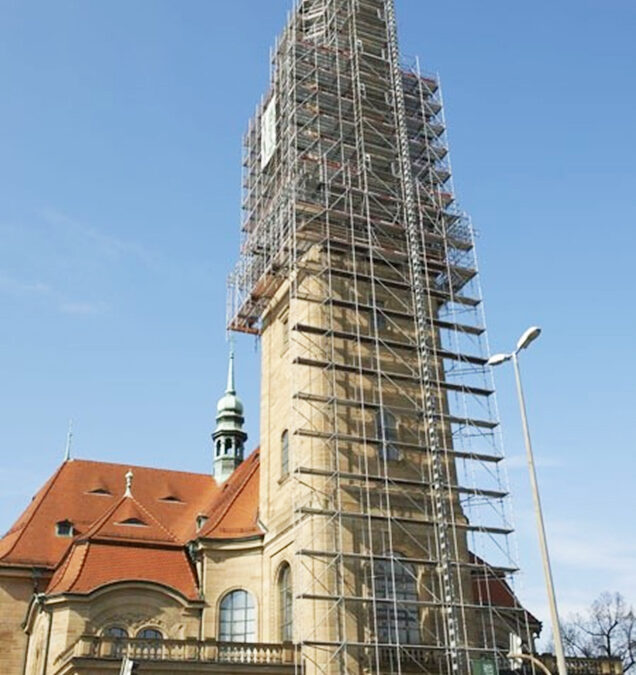
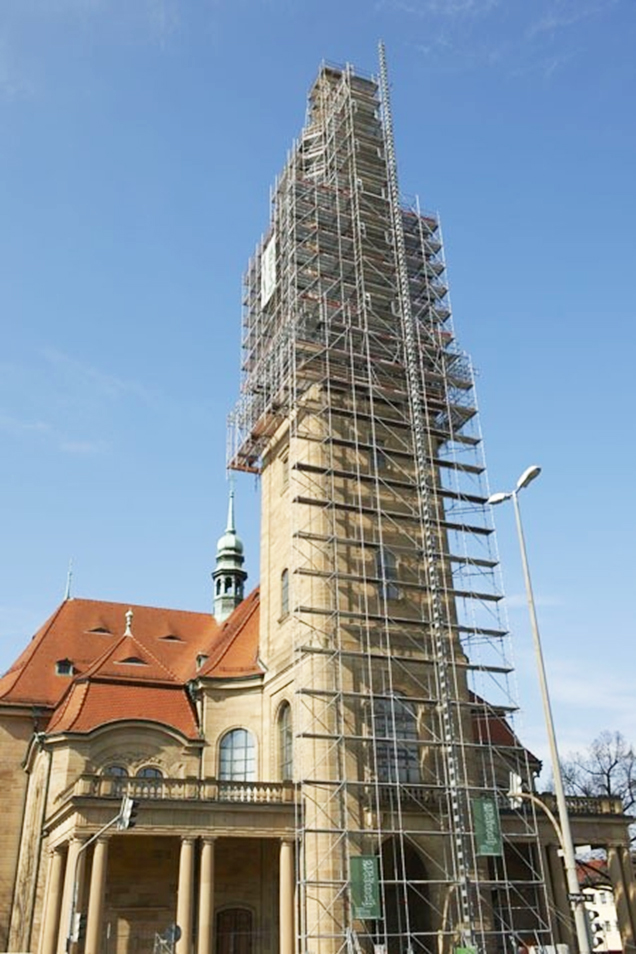
Layher Allround System, the scaffolding company Mönch erected the work scaffolding for renovation works at the “Friedenskirche” church in Ludwigsburg not only very cost-effectively, but above all perfectly adapted to the local conditions – for safe working in highest altitude.
The reason for this is extensive redevelopment works on the belfry of the church listed for preservation. The 72 metres high work scaffolding was erected at Ludwigsburg; as material the scaffolding company chose the Layher Allround Scaffolding. Especially on irregular designs like around and in churches, the Allround Scaffolding impresses with its flexibility and the safe and easy handling. With its advantages like screw-less quick and self-explanatory assembly, form-fitting and solid connection, dimensional stability and rigidity, scaffolders quickly create safe workspaces for the following assembly sections. Even in highest altitudes – and under high loads. After all, heavy stones have to be stored temporarily on the scaffold during the renovation.
In order to adapt the work scaffolding exactly to the design characteristics of the tower – with short bay lengths due to the tapered cone with its structure divided by ornaments – the scaffolders had to do an accurate planning before starting to build the scaffolding. Only on the Eastern façade that faces the street the scaffold was erected as an access on the total height of the tower. On the other sides of the tower, the scaffolders erected the scaffolding in a height of 32 metres, where the tower gallery is. The bearing in this area was carried out with steel beams and lattice girders. In order to be able to work on the ledges, additional suspended scaffolding at approximately 2 metres under the tower gallery was necessary. A passenger lift did not only go easy on the employees, but also the time account. Thus 5 scaffolders erected the scaffolding in 5 weeks quickly, efficiently and, above all, all the way to the top thanks to careful planning and sophisticated logistics – a precision landing.
Now there are no more obstacles in the way of a quick redevelopment of the dilapidated belfry. Especially the quadrangular round sandstone columns show considerable damages. The mortar has become loose in the gaps; the stones are no longer placed safely on top of each other – a danger for the building, but also for passing traffic.
The main cause, however, is the weather, as the sandstone cannot withstand the huge thermal strain. Currently, the need for renovation is
being analyzed exactly from the scaffolding; afterwards the stone restoration company and the stonemasons will start their work.
For further information,
visit: www.layher.co.in
by Sawon Banerjee | Feb 15, 2021 | Construction Equipments
|
Mr. Deepak Shetty
Deputy CEO &
Managing Director,
JCB India Limited
|
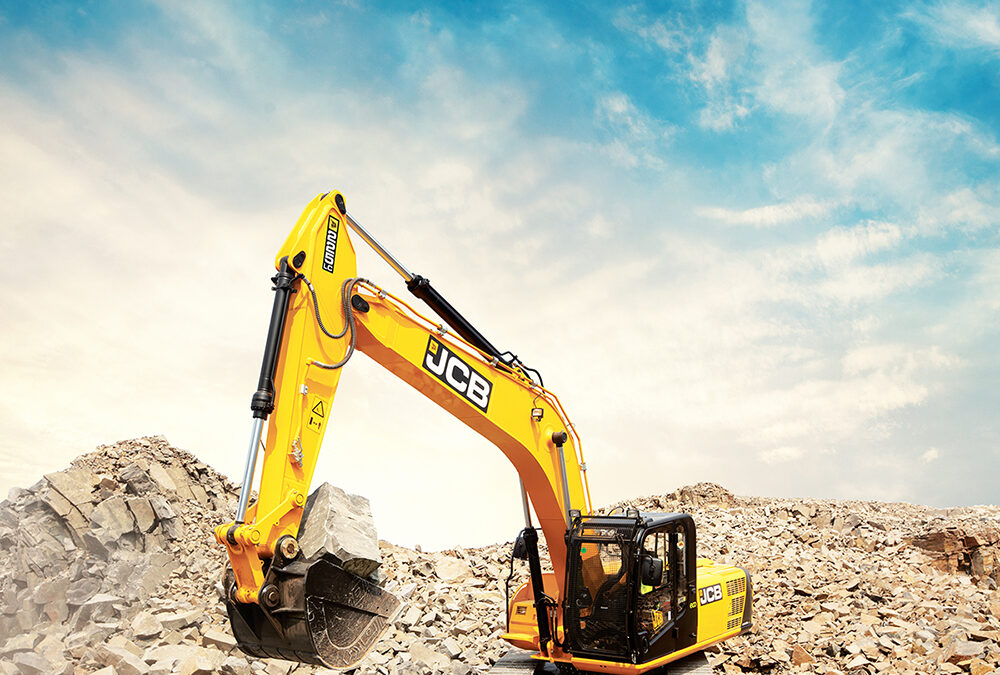
With over 60 products in eight categories, JCB India is committed to being an infrastructure equipment partner for its customers. We have made significant investments in our excavator range. We have our intelligent NXT range in the 14 – 24.5T on category and our robust Quarry Master in the 14 to 38 ton category. They come with a choice of different power modes for a variety of excavation capacity requirements.
The 20T and 21T models save up to 32% fuel in the economy mode compared to the outgoing models and have a robust dig end and X-type frame. They are designed for arduous quarry jobs.
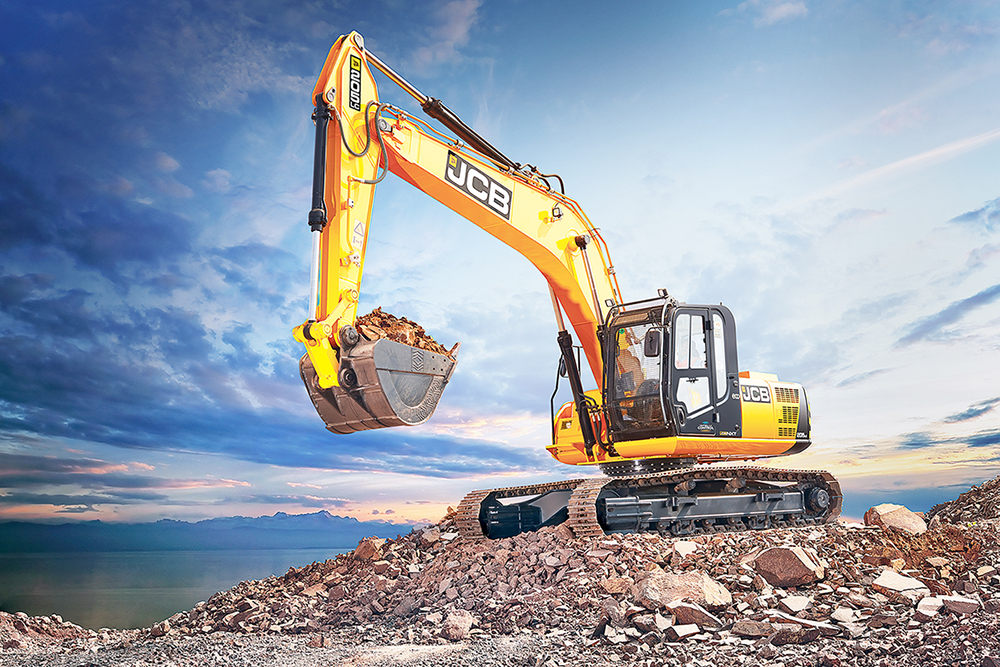
The new JCB 225QM has eight power modes, giving operators the flexibility to work in their desired mode in various applications. The machine is powered by the JCB ecoMAX engine, which produces 170 HP and provides a strong torque of 695 Nm. The model comes with reduced maintenance and a warranty of two years or 5,000 hours of operation. With a deep section boom design, improved hydraulic filtration, and heavy-duty track chain assembly, it is exceptionally durable; and the heavy-duty cab guards ensure more safety to the operator.
The JCB NXT range of excavators is designed for high productivity and fuel efficiency. The machines come with ten working modes and increased efficiency of up to 32% in Eco mode on the JCB NXT205 and JCB NXT215LC. The low maintenance excavator range comes with a standard warranty of 2 years or 5,000 hours. The deep section boom and hydraulic filtration features give the excavator range increased durability.
Our JCB NXT 245 HDLR (Long Reach) can dig up to a depth of 40 feet and reach up to 51 feet. Equipped with energy-saving JCB eco hydraulics, it stands out as an extremely fuel-efficient machine. Its strong X-type frame coupled with a pre-installed hose burst check valve for boom and arm make it one of the most robust and safe excavators. Further, ‘intellicontrol’, a Livelink-enabled solution, gives critical information on the equipment’s operations remotely.
JCB mini excavators are used for urban development projects that demand compact machines to work in restricted spaces. The range includes the 3T to 5T category in models such as 30 plus, 50z, 51R and 55z. The 50z and the 55z come with a zero tail swing design for higher performance and versatility when used in tight spaces. They also have a range of attachments like soil drills, rock breakers, etc. and customized mode selection, which allows the operator to choose from light, eco, heavy or heavy+ depending on the work.
With infrastructure being developed in many urban areas, our mini excavators can use space-constricted urban or semi-urban areas. They are apt in the areas of Urban Rejuvenation and Housing projects.
Customers today want utility and efficiency of the equipment without compromising on safety. Newer concepts like Telematics, IoT, Big Data Analytics, and Machine Learning can play a major role in meeting customer demands and increasing the sector’s efficiency.
JCB India has been innovating continuously to create smarter machines that efficiently fulfil this demand. Our vision is to ensure that our customers get technologically advanced and innovative ‘Made-in-India’ products, thereby also contributing to making India a global manufacturing hub. Through this indigenous manufacturing of globally competitive products, we are also ensuring our support to the vision of ‘Atma Nirbhar Bharat Abhiyan’.
Smart machine management can be experienced in JCB machines through LiveLink – an advanced telematics technology that benefits in better fleet management through remote monitoring online. It helps users increase productivity, control costs and ensure asset safety. To date, approximately 1,60,000 LiveLink enabled JCB machines have been sold. These machines can be monitored for – security, operations and service (SOS) on mobile devices.
Machines can be geo-fenced, time-fenced and can be located anywhere. Customers get to know about the machine’s health, fuel level, battery conditions, etc. – almost all critical parameters of the machine on their mobile device. It also gives out service reminders and the history of the machine.
We have pioneered the integration of digital technology in our ‘Intelli’ series of Construction Equipment. This has improved our machines’ productivity, reliability, and efficiency to ultimately benefit our customers with ease of operation and cost profitability.
Technology has been transforming the way Machine-to-Machine and Machine-to- Customer business is being done. All vital information about the machine is available to customers on their mobile devices through a web browser or the ‘Livelink’ mobile application. Additionally, the system also sends out alert SMSs to registered mobile numbers.
LiveLink benefits customers in better fleet and fuel management by enabling remote monitoring and management of their machines. JCB LiveLink incorporates GPS, Telecommunications, Machine Electronics and IoT, enabling the equipment to remain in contact with the owner, dealer and JCB.
Fuel efficiency, performance, and smart machine management can be experienced in these machines through LiveLink. Accurate monitoring of machine-hours and service alerts improve maintenance. Technical alerts and maintenance history data helps customers manage the health of the machine. Early warnings with detailed machine history enable users to plan work. LiveLink helps manage machine health to keep your machines running or maximum uptime and return on investment.
LiveLink, can help lower servicing and running costs by ensuring machines are operated to their optimum performance, reducing fuel consumption and unnecessary machine wear. By monitoring idle time and real-time fuel consumption, LiveLink helps manage the whole life cost of ownership, driving down costs and driving up productivity. It helps keep machines safe and improves control over machine misuse. Alerts can be set up for when a machine is moved out of or into a predetermined zone, these geofences are customizable to the space required.
JCB has also pioneered the integration of digital technology with its digital initiatives for customer support, which are an industry first, in its kind. The JCB genuine parts application enables customers to order parts of JCB products on their mobile.
Further, an internal tool – Smart Serve has been developed to help dealerships support engineers to improve efficiency and productivity, thereby improving profitability. JCB India also provides the widest after-sales service to its customers through 700 outlets and over 60 dealers. Since these machines work in far-flung areas, well-connected product support must be offered to customers to minimize downtime and maximize productivity.
JCB uses state-of-the-art technology to provide the industry’s finest customer support for its customers. This facility develops exciting new technologies of the future and works on Global and Domestic projects. Thus JCB India, Innovates, Designs, Manufactures and Exports from India.
With the government’s increased thrust on infrastructure, big-ticket infrastructure projects are coming to the fore. These demand the best quality output and work on tight timelines, thus creating a need for specialized, intelligent and technologically advanced construction equipment.
For further information,
visit: www.jcb.com/en-in