by Sawon Banerjee | May 7, 2021 | Construction Equipments
Iron Ore Mining In India
India is bestowed with large reserves of iron ore and it is the 2nd largest producer of steel across the globe. India’s total iron ore production for the year CY19 was 231 million MTs which enabled 90% (111 million MTs) of steel production. Hematite and magnetite are the most prominent of the iron ores found in India of which hematite is considered to be the most important iron ore because of its high grade quality and lumpy nature which is consumed by a large number of steel and sponge iron industries in the country.
Odisha And KCCL
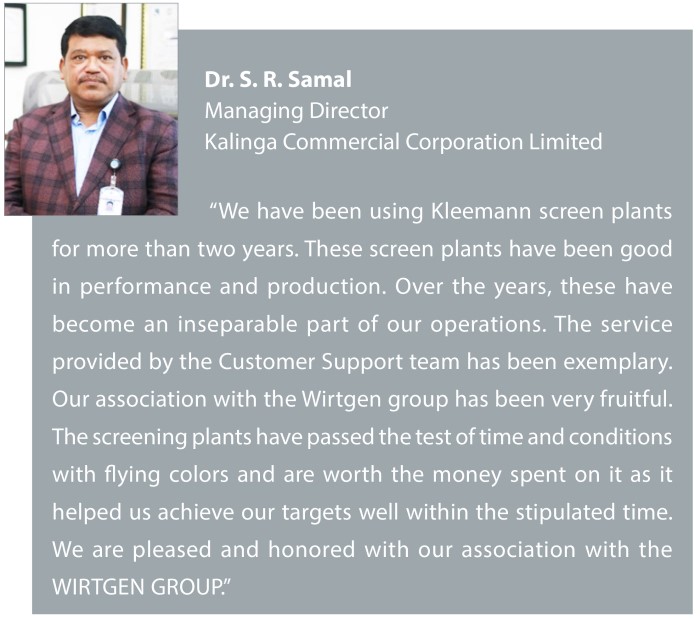
Odisha is a significant contributor to India’s total iron ore production. Odisha Mining Corporation (OMC), a state-owned entity, has awarded its iron ore mining contract to Kalinga Commercial Corporation Limited (KCCL) for its Gandamardhan Hill top mine located at Keonjhar, which is 200 kms from Bhubaneswar, the capital city of Odisha.
KCCL uses Open-pit mining technique by developing benches from top to bottom to extract the ore. Run-of-mines (ROM) excavation is done by drilling and blasting. More than 20 excavators having bucket capacity from the range of 2.1 cubic meter to 4 cubic meter are used for excavation, handling and loading of the ore, followed by approx. 140 nos. mining and dumping trucks having capacity from 19.5 cubic meter to 24 cubic meters to help transport the material from the mines to screening plants to get the output in required sizes.
Kleemann Mobile Screening Plants
Six Kleemann Mobile Screening plants are deployed on the Keonjhar site, since January 2020 to systematically screen the final output of the required sizes. Five of the mobile screens are of double deck configuration (MS 952 EVO) with three outputs and one screen is of triple deck (MS 953 EVO) with four outputs. With the deployment of these six mobile screens, KCCL has continuously met a daily production target of 30,000 MTs by operating in 2 shifts.
KCCL’s output requirement is of 0-10 mm (Fines) and 10-40 mm (Lumps). Kleemann MS 952 with its two-deck design and large screening area of 9.5 square meters is able to effectively segregates the lumps and fines to meet its quality demand of the product.
Kleemann mobile screens are offered with 2 and 3 deck configuration and screening areas of both 7 sq. meters and 9.5 sq. meters. These machines can operate at 4 different inclination angles that can be adjusted from 20 degrees to 31 degrees based on application requirements.
The screens comes with 1200 mm and higher width discharge conveyors, capable to accumulate bigger stockpiles of material under its conveyors resulting in less frequent use of loaders to shift the stockpiles.
The screening plants are powered by highly efficient power pack with an option of external power supply for cost effective and environment friendly operation in case of availability of power supply on job sites.
Kleemann intuitive touch screen control panel offers intuitive and user-friendly operation. This makes the machine setup a one-person job. The control panel with its 25 m cable can be connected at three different positions which ensures that the executed functions are clearly visible and high work and operation safety can be guaranteed. To prevent any manual errors, the screening plants are also equipped with proportionate valve control for safe and precise movements.
As an optional component, Kleemann offers wireless remote to provide more flexibility in operation of the machine and also an optional water sprinkling system for dust suppression. Kleemann screening plants are equipped with Wirtgen Telematics system which provides remote access to the customer for monitoring the machine parameters like hour meter reading, location, fuel consumption data, availability, service, and maintenance schedule.
The “Made in India” KLEEMANN screen is a global product being exported worldwide and WIRTGEN INDIA is the largest exporters of these screening plants from India.
For further information,
visit: www.wirtgen-group.com/india
by Sawon Banerjee | May 7, 2021 | Construction Equipments
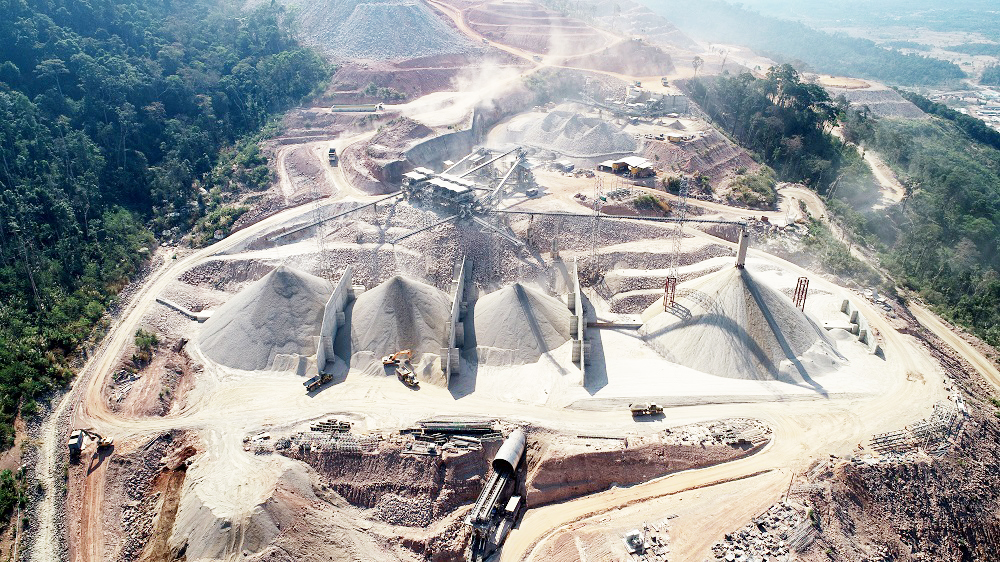
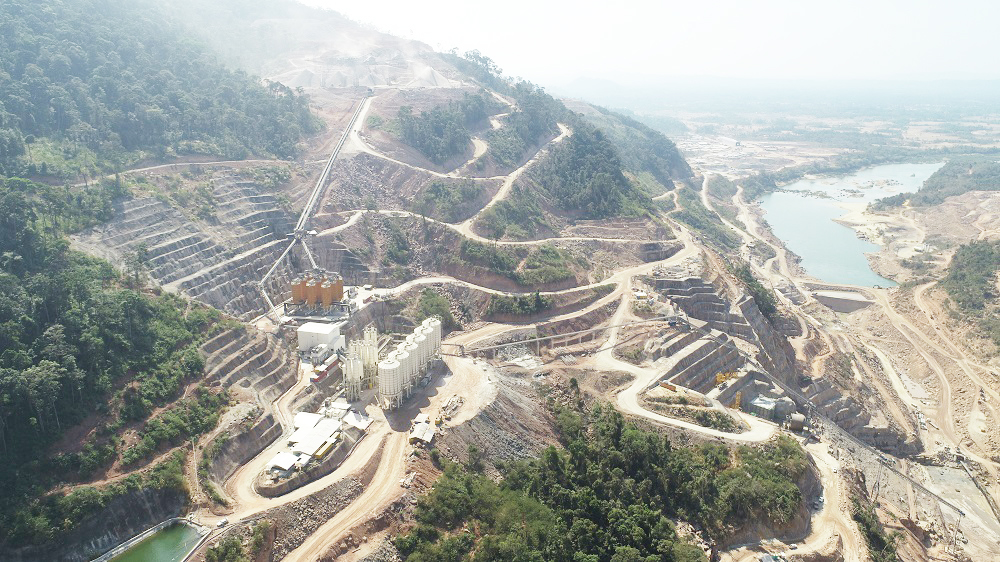
Ajoint venture of Italy’s Cooperativa Muratori e Cementisti (CMC) di Ravenna, Thai company Ital Thai and Vietnam’s Song Da Corporation is using a 1,500mtph ICM – Terex MPS plant to produce aggregates for a 4 million m3 RCC (rolled compacted concrete) and 5 hundred thousand m3 CVC (conventional concrete) dam at the Nam Theun River, Bolikhamsay Province, Laos.
The dam, which is 105m high and 700m long at the top, will produce electricity in three groups: two units of 250 MW to be distributed in Thailand, and one group of 150 MW to be distributed for local use in Laos.
The solution consisted of a complete crushing plant to produce 1,500mtph of concrete aggregates. The plant is made up of two Simplicity Vibrating Grizzly Feeder 5220, two Cedarapids Jaw Crushers JS4552, four cone crushers, of which two are Cedarapids MVP550X and the other two are Cedarapids MVP450X, three ICM Vertical Shaft Impactor T-MAV 21, two Cedarapids Horizontal Screens TSV 6202, and six Cedarapids Horizontal Screens TSV8203. Additionally, the set up includes an impressive 45 conveyors (total length of 1,400m), and the installation of 5,000kW of power.
Terex MPS Plant – Laos Dam Project – Photo Credit ICM
The plant is being fed by blasted sandstone rock with a high abrasion index to produce 0/5, 5/12, 12/25 and 25/50 mm, as dictated by the mix design of the RCC, with any excess being recycled. A reclaiming plant transports aggregates from stock to a cooling plant via two downhill conveyors (one for coarse aggregates with a capacity of 1,800mtph and one for sand with a capacity of 700mtph). The supply is completed by a set of conveyors with a capacity of 1,000cmh to pour RCC into the dam.
Due to the abrasiveness of the sandstone, distributor ICM srl, Italy, designed the plant to use jaw crushers and cone crushers in the first instance to get the rock to the required size for the RCC—at this stage not worrying about the shape of the aggregate. Once sized, the shape is improved using the Vertical Shaft Impactors. Mr. Icilio Guicciardi, ICM explains, “This is a philosophy that always gives good results in terms of the quality of the aggregates and the reduction of wear costs. Having a solution that satisfies our customer’s strict requirements was of utmost importance to us and we knew that this plant set up would produce the output required.”
Terex MPS Plant – Laos Dam Project – Photo Credit ICM
Commissioned in 2018, the plant was supplied by distributor ICM srl, Italy, who also completed all the engineering required (except civil works), equipment, electrical system (power and controls), steel work (hot galvanized), delivery, assistance to assembly and erection up to commissioning (with customer crew). The plant is now being operated by Sinohydro, with works expected to be completed in 2023.
Mr. Icilio Guicciardi, ICM continues, “This type of project is significant for ICM because it gives us prominence in the market and at the same enables us to supply an interesting line up of equipment in one shot. This is the third plant, in less than ten years, that ICM has supplied for the production of aggregates for the construction of a major project (dam, canal, etc.)—having supplied Panama with a plant to produce 3,300mtph of basalt and Ethiopia with a plant to produce 2,000mtph of granite. Through these projects, ICM has shown the added value that we provide to ensure the performance of our Terex MPS equipment, in particular our cones and screens, and in the speed of delivery and assembly of the plant—Panama was delivered in four months and started production in 10 months, while Ethiopia and Laos were delivered in three months and started production in 6 months.”
RCC Conveyor – Photo Credit ICM
Paul Lilley, Sales Director, Terex MPS for the ERA said, “The plant installation at Laos Dam demonstrates how our equipment can be seamlessly combined to provide a tailored solution that consistently delivers aggregates that meet customer requirements—even in complex, extensive projects such as this. We have no doubt this plant designed by ICM will continue achieving ultimate efficiency and production output through to project completion.”
For further information,
visit: www.terex.com/mps/en
www.icmcave.com
by Sawon Banerjee | May 7, 2021 | Construction Equipments
|
Mr. Sanjeev Thakur
Head, Product Development,
Gujarat Apollo Equipment Limited
www.apollo.co.in
|
A high-efficient and environment friendly crushing equipment can improve the efficiency of the whole production line and increase the income of customer. The following principles and factors help us choose suitable crusher:
The basic principles of crusher selection for GSB
- The Period Of Operation: Long linear projects of highways with short construction period and relatively scattered amount of crushed stone, especially, semi-mobile/mobile combined crushing and screening equipment is preferred.
- The Specification Of Stone Materials: To produce GSB from large feed size Jaw crusher should be used as the primary crushing equipment, as the stone material size is required strictly, it is necessary to select the combined crushing and screening equipment, such as the jaw crusher, secondary jaw crusher, cone crusher and impact crusher, and is matched with screening equipment of certain size and specifications.
- The Nature Of Stone Materials: When crushing hard or medium hard stone materials, the jaw crusher should be selected as the primary crushing equipment. When crushing soft stone horizontal impact crusher can be directly used.
Factors to consider when choosing a crushing equipment
- Economic Constraint: Prior expenditure and investment is necessary to support the normal operation of machine. The expenditures are the costs of recruitment and training of related personnel, the packaging, calibration and certification of machines, etc. The price and payment methods of machine are usually considered by customers with financial constraint, which is directly related to the continuity of the project. The installation cost includes the cost of reinforcing steel and concrete materials, labor and the lifting equipment.
In addition to the working and idleness costs of the crushing and screening system and the maintenance and repair costs of the equipment, the blasting production and operation costs associated with the machine should be included.
- Technological Reliability: Usage reliability is an important factor for evaluating the technique and performance of equipment. In general, it is required that the machine can work for 1,500 to 2,000 hours continuously without any mechanical failure. If the working environment is terrible, the reliability is more important. Gujarat Apollo has a worldwide reputation and a trusted supplier to customers. The manufacturing technique is an important pre-requisite for ensuring the reliability of equipment. It reflects and measures the technical and management level of the manufacturer. Generally, according to the production efficiency, a positive and negative production capacity can be determined, that is, the upper and lower limits of equipment production capacity that are compatible with the project can be determined. There is a certain difference between the actual production capacity of the equipment and the theoretical production capacity, which varies with the changes in the types, hardness and specifications of the crushed materials. The actual production capacity should be higher than the average production capacity of the project to ensure a certain surplus of production capacity.
- Output Capacity: Choose the representative stone for analysis of lithofacies and chemical components, such as limestone, granite, basalt and the types and content of the main mineral, accessory mineral and secondary mineral contained in stones. When it comes to strength, it generally, means the uniaxial compressive strength. It can be divided into four types: soft rock (<40MPa), secondary hard rock (40-100MPa), hard rock (100-160MPa), and super-hard rock (160-250MPa). Hardness is usually the moh’s hardness, indicating the ability of minerals to resist external mechanical force. The total output is generally based on how many tons of stones are crushed per hour. If the annual or monthly output is used as the standard, it is required to determine the annual working day and daily working time in order to determine the hourly workload, that is, the expected production efficiency.
- Installation Site: If the crushing and screening equipment is installed at a site with a certain slope, it is beneficial to reduce the earthwork. When selecting equipment, the focus is on the natural drop height of the feeding machine and equipment, as well as the shape and space of the equipment installation floor. The site range is usually determined by factors such as equipment installation floor space, feed and discharge ports, product storage methods, product specifications and storage, generator room, warehouse, living facilities, guard room, etc.
- Civil Work: The supporting methods of the crushing and screening equipment, the difficulty of installation and the construction amount of the steel and concrete are also the factors to be considered when selecting the machine. Skid mounted/semi-mobile plant has the advantages of simple construction, easy assembly, and disassembly, rapid transition, etc. which is suitable for long-term road projects with scattered stone materials.
- Service And Maintenance: Maintainability refers to the accessibility of maintenance, the interchangeability of parts, and the error-proof design for maintenance. In the implementation process, in order to improve the utilization rate of the machine, it is often required that mechanical failure can be handled on site. This requires that the machine must be disassembled and installed easily, the supply of spare parts must be reliable and interchangeable, and special tools for special parts should be provided, etc.
- Compatibility Of Equipment: The compatibility between the equipment introduced and the features of the project. Compatibility in the machine group: the compatibility among the equipment introduced and existing devices such as the loader, dumper, etc. and the impact on the existing devices.
- Relationship Between Worker And Machine: The machine must have comfortable operating conditions, wide visibility and ventilation. It reflects the operability of the equipment.
- Environment Requirements: It refers to the degree of environmental pollution, that is, the impact degree of equipment installation and operation on the surrounding environment, mainly reflected in two aspects, dust and noise.
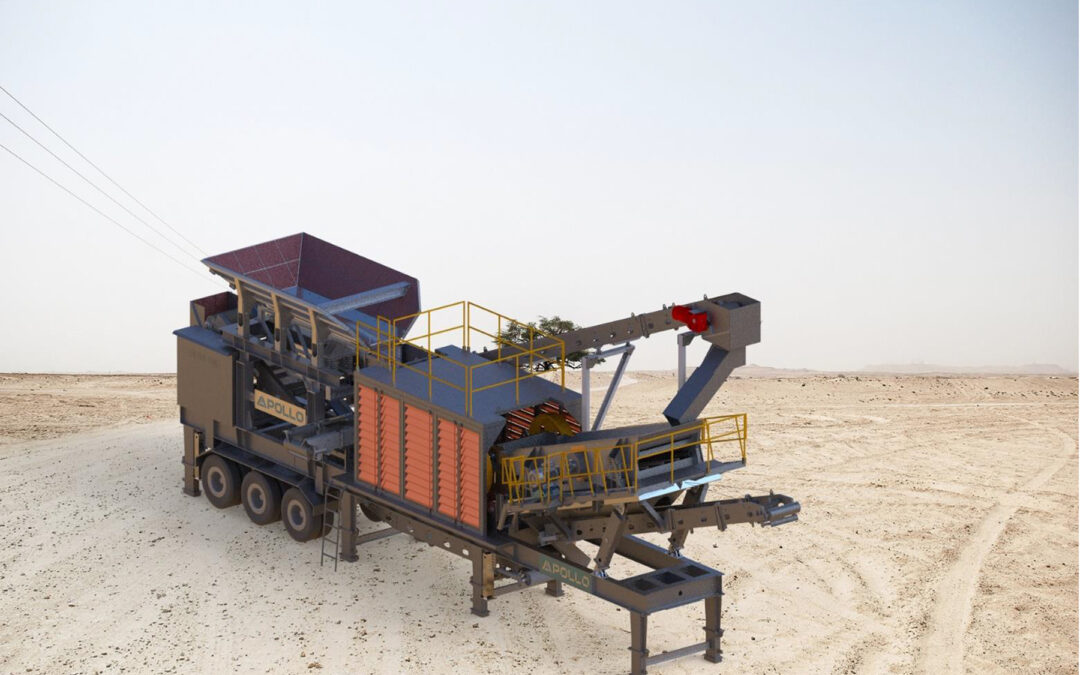
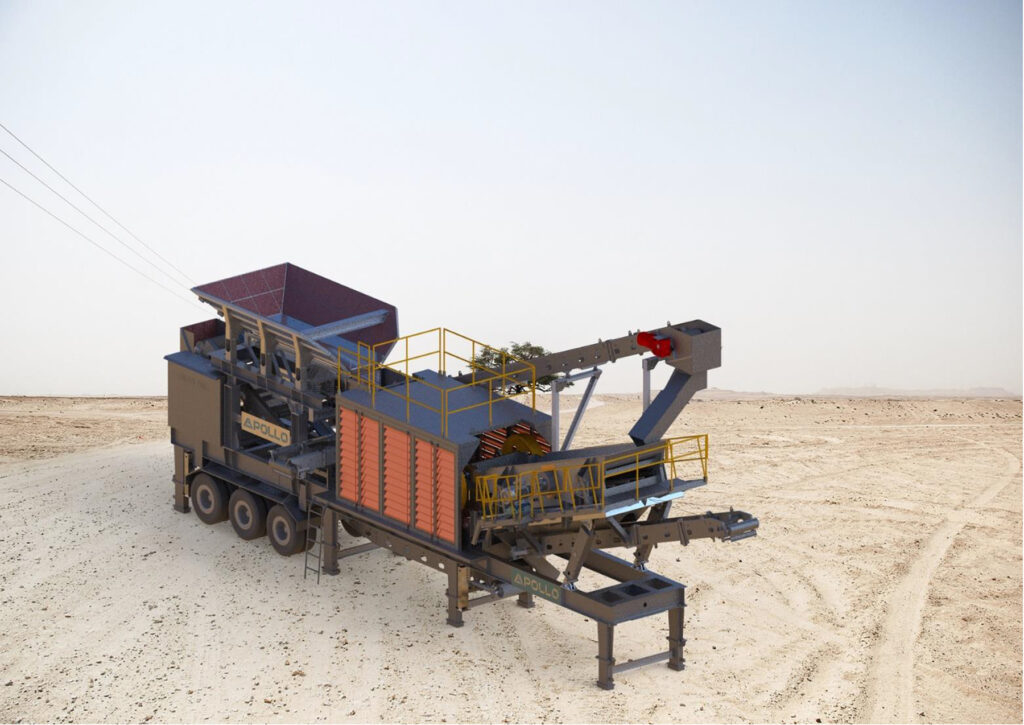
Gujarat Apollo makes Semi-mobile integrated model BEW3648 designed specifically for GSB production from hard stone e.g., Basalt, Granite, Quartzite etc.
Model Inhouse B900X600 Jaw Crusher as primary Crusher, B1200X250 Jaw Crusher as Secondary Crusher and S1540D2 Screen with all the conveyors on board. A Jaw-Jaw combination makes it simple to operate, maintain and service as well as economical one.
BEW3648 been supplied to some of our esteemed customer who are successfully running the plant for their GSB requirement include –
M/S Mangal Singh Rajput, Vidisha, Madhya Pradesh, India
M/S Uma Stone Product, Santalpur, Gujarat, India
Conclusive Remark: For GSB production we have developed a model which is very much in line with the customer’s requirement. It has all three “E” attributes customer demand for –
- Efficiency: Its output efficiency is 98% which is much higher than normal crushing equipment efficiency of 85%.
- Environmental: Plant is very much dust free and noise level well within ISO specified limit of 112dB at 1m, which makes it eligible to install it close to highway under construction. A Jaw- Jaw combination give the advantage of producing less dust in output compared to Jaw-Cone
or Jaw-Impactor.
- Energy: Model is Jaw-Jaw combination which makes it energy conservative compared to Jaw-Cone or Jaw-Impactor. Per tonne energy consumption is 20% less than compared combination.
by Sawon Banerjee | May 7, 2021 | News
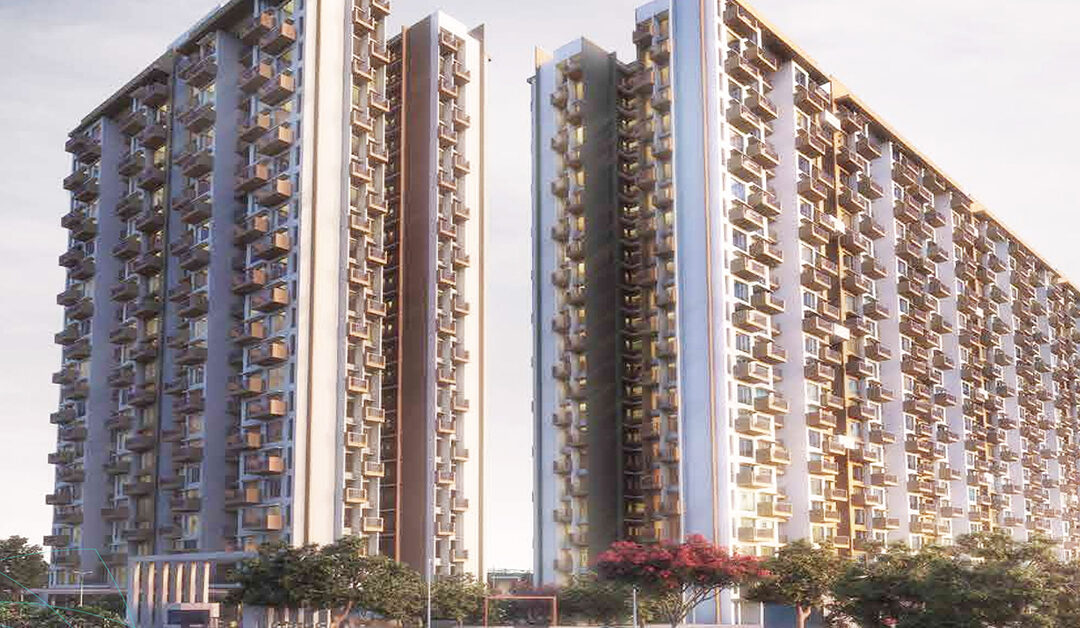
Godrej Properties (GPL) has emerged as the highest bidder in the City and Industrial Development Corporation of Maharashtra (CIDCO) auctioning process for two adjacent plots in Navi Mumbai.
The two plots acquired by GPL from CIDCO is located in Sanpada, Navi Mumbai.
The overall bidding value is ₹166 crore for the two adjacent plots which are approximately one km away from Palm Beach, Sanpada.
The project covering over 1.5 acre, will offer over four lakh sq ft development potential comprising primarily of premium residential apartments of varied configurations along with a small amount of high street retail at the base of the development.
by Sawon Banerjee | May 7, 2021 | News
Realty developer Migsun will invest ₹500 crore in a residential and commercial project in Lucknow, Uttar Pradesh.
Situated next to Medanta Hospital, the residential project will have around 1,000 units, and the commercial project near Shaheed Path will be spread over four lakh sq ft.
Migsun has recently announced the acquisition of HDFC and Ansal’s stake in Ansal IT City Park (SEZ) Tech Zone, Greater Noida, where it will develop the 37.5 acre mixed-use project with commercial, IT and industrial units.
The Group will hand over 4,000 apartments and commercial properties in six projects by 2022.