by Sawon Banerjee | Jun 6, 2020 | Interviews
|
Mr. Debasis Bhattacharya
Head – Marketing, Sales and Product Support
AJAX Engineering Pvt. Ltd.
|
“To set the ball-rolling, AJAX has become more resilient, adaptive and competitive like ever in this complex and uncertain period of pandemic with resilience and resourcefulness” says Debasis Bhattacharya, Head – Marketing, Sales and Product Support at AJAX Engineering Pvt. Ltd., in conversation with Civil Engineering and Construction Review.
Civil Engineering and Construction Review: How has your organization strategized to tackle this sudden pandemic and economically challenging scenario?
Debasis Bhattacharya: AJAX has evolved over time by adapting to the needs of its customers with a clear and consistent goal towards becoming the most customer-centric organization with a strong customer focus.
AJAX has become more resilient, adaptive, and competitive in this complex and uncertain period of pandemic. We have a strong focus on the capabilities needed to succeed in the constantly changing market dynamics, especially, in this COVID-19 pandemic time, thanks to our technological innovations that have been able to meet up the challenges and continuously align with the fast-changing industry trends amidst lockdown.
With the sudden emergence of a deadly new coronavirus, we had instilled the right confidence into our work-force to face the uncertainty phase with a clear mind, a new set of collaborative principles, coherent thought process, more cohesive effort to engage our customers.
In the RESPONSE/RECOVER phase of COVID-19 outbreak, AJAX has leveraged its capabilities with a strong network of over 100 touch points and over 30 dealers with triple S facilities – sales, service, and spare parts. We add value to our close to over 18,000 satisfied customers. They have seen, realised and experienced the value we have brought in. And we will keep on adding value to our customers. AJAX keeps in touch with all its stakeholders through digital channels and leverages digital solutions to engage customers, provide support and add value-propositions that are unique to them.
CE&CR: Focus of Innovation as a way of life at AJAX amidst lockdown.
Debasis Bhattacharya: The big takeaway is to see what’s possible when innovation is in AJAX’s DNA. Describing the focus of innovation at AJAX, AJAX has always strived to be a ‘360° concreting solutions provider’ to its customers, and the company is moving towards artificial intelligence and other advanced manufacturing concepts.
AJAX self-loading concrete mixers are versatile and have hydraulic sensing, meaning a pressure transducer and a device to add the weigh batching of aggregate, cement, and water. AJAX has been focusing on improving the accuracy of weigh batching that is critical in the quality of the concrete. Of late, we have come up with a load cell-based weigh batching system (patent pending).
During EXCON 2019, AJAX also launched a first-of-its-kind next-gen self-propelled boom pump, SPBP25ZX. This patent-pending product has been designed to handle tough terrain and manoeuvre narrow roads and job sites at ease, and effectively use its full boom length to revolutionize the way concreting is being done in housing and infrastructure projects.
AJAX slip form paver SPX1204, the first indigenous paver designed and manufactured in India launched during EXCON 2019 has been incorporated with high-quality components and features on par with any of the pavers offered by the global players. This paver has flexibility to offer paving width varying from 3.5 m to 12 m.
CE&CR: In your opinion, tell us about the possible impact the situation will have on India’s manufacturing sector and on the economy.
Debasis Bhattacharya: “India would witness a big slump in the current and coming quarter; however, it is all set to bounce back post recovery of this COVID-19 pandemic stated by leading financial rating agencies. This would drastically affect the construction equipment sales in India that are expected to drop very significantly during FY 202-2021 due to this coronavirus outbreak. Our Construction Equipment (CE) industry is also set to bear the brunt of the effects of COVID-19. This pandemic has dented our economy very badly, impacting the overall CE industry growth with severe repercussions on the future growth prospects. But, the full financial impact of the coronavirus crisis cannot be gauged right now as it will be too early to assess. Even after the crisis is brought under control and construction works start to roll, the upcoming monsoon will be another big blow that will add further onus onto the growth and severely impedes the construction works likely from June 2020 onwards.
CE&CR: Post-lockdown what would be your organisation’s agenda to sustain a possible market slowdown/downfall.
Debasis Bhattacharya: AJAX is geared-up to fight the slowdown blues. To set the ball-rolling, AJAX has come up with the rebound strategy, a detailed business continuity management plan that enlists a set of protocols and standard guidelines that would comply with the newly established norms and regulations by our Government for safe and best practices. This would be religiously followed in the factories, offices, and business establishments of AJAX pan India.
When organizational preparedness being the real key to combat post COVID-19 lockdown with resilience and resourcefulness, AJAX will redo the Value-stream mapping across their supply-chains as this would deem to be a right opportunity to rethink, revisit, reinforce our supply-chains.
- Channel partners: Distribution strategy/delivery model as a defragmented channel structure thro’ integrating dealer network over the digital platform is being contemplated by AJAX.
- Efficiency accelerators: Firstly, with social distancing norms at factories, logistics, and warehouses, the need for reducing people density across the supply chain has become a mandate now and AJAX would chart out a plan for that by deploying ‘alternate shift’ practices in the factories. Secondly, with the elimination of non-value added activities that would improve the value of its products and services, AJAX would look into optimizing direct and indirect cost that would result in significant cost reduction, strengthening cash flow and emerging from this downturn with a stronger and more competitive profile.
- Digitization: As the entire nation is struggling to cope with this outbreak and all sectors face some form of disruption, COVID-19 is silently shaping business transformation. AJAX is active in the digital platform and maintains a strong digital footprint. This helps AJAX underscore the importance of digital transformation by providing unparalleled opportunities to offer personalized service to customers. Customer focus, as a way of life is the basis for AJAX’s digital transformation decisions.
CE&CR: What is the need of the hour from the government post covid-19 scenario?
Debasis Bhattacharya: In the wake of slowdown like this, liquidity is one of the major challenges that has adversely impacted construction equipment sales as well as the rate at which projects are completed. It is one of the major areas of challenges what the CE industry is facing today. There have been some delinquencies especially contractors not getting paid by the principal clients. Customers have become hesitant to new equipment, especially first-time buyers. But we expect reasonable amount of business soon. There is no dearth of projects, but financial closure has become an alarming issue. Delinquencies, especially contractors not getting paid by principal clients is a concern as is the diversion of funds from infra-related projects to social spending. Customers have become hesitant to buy new equipment, especially first-time buyers. CE industry is looking for a good stimulus in infrastructure and housing industry to pave the way for the economy to get rolling and to reinvigorate confidence in the construction sector.
by Sawon Banerjee | May 19, 2020 | Interviews
by Sawon Banerjee | May 6, 2020 | Interviews
|
Mr. Vijay Sharma
Director
Jindal Stainless |
Founded in 1970, Jindal Stainless is one of the largest stainless-steel conglomerates in India and ranks amongst the top 10 stainless-steel conglomerates in the world. Mr. Vijay Sharma, the Director of the group, shares his insights on the stainless-steel market and the Indian construction industry.
Civil Engineering & Construction Review: How do you think the government’s big decision of slashing corporate tax will impact the stainless-steel sector in the near term?
Vijay Sharma: This incentive will not only contribute to ease of doing business in the nation but will also attract foreign investments in brown-field and green-field projects, thus spurring economic growth. The step will ensure free cash flow, meanwhile enhancing employment. The domestic stainless-steel players need to capitalize on the increasing stainless-steel demand in India, currently growing at a CAGR of 8-9%. The domestic stainless-steel industry welcomes this affirmative policy initiative by the government and believes that this decision will give a fillip to plans of diversifying or adding capacities.
CE&CR: What are the stainless-steel products offered by your company for construction?
Vijay Sharma: As India’s largest fully integrated stainless-steel manufacturer, Jindal Stainless is currently producing for all major sectors including Architecture, Building & Construction (ABC); Automobile, Railways & Transport (ART); process industries and white goods. The company produces world-class stainless-steel coils in both hot-rolled and cold-rolled forms, sheets, coin blanks, and precision strips. The company is the world’s largest producer of stainless-steel strips for razor blades and India’s largest producer of coin blanks, serving the needs of Indian and international mints. As market demand for more durable, aesthetic, maintenance-free, and sustainable materials is on the rise, stainless-steel products are now being widely used in civil construction and infrastructure. Moreover, stainless-steel is innately strong and is an all-weather material. Ease of fabrication and range of surface finishes give stainless-steel an edge over other materials.
Jindal Stainless has been making dedicated efforts in stainless-steel ornamental pipes and tubes segment which are generally used in handrails, balcony railings and gates. We have recently launched co-branded stainless-steel pipes and tubes with domestic pipe and tube manufacturers with the aim of curbing substandard material in the market. The company is catering to an increasing demand for stainless-steel roofing, interior, architectural cladding, lifts, elevators, etc. is also witnessing an increased demand.
We are also producing for prominent stainless-steel structural applications like bridges, flyovers, and foot over-bridges in the urban civil infrastructure. This new age infrastructure like metro extensively uses stainless-steel as its basic material. Major economies across the globe use stainless-steel in construction sectors more aggressively than India. Therefore the potential for stainless-steel growth in this segment is immense.
CE&CR: How do the cheaper stainless-steel imports impact the Indian industry?
Vijay Sharma: India is the second largest consumer and producer of stainless-steel in the world. The metal has registered the highest growth rate in India as compared to rest of the world, with the per capita consumption of stainless-steel at ~2.5 kg. However, this is almost half of the world average. This underlines that India is a distant second (as compared to China) and thus, holds immense potential for stainless-steel growth. This makes India an attractive market for stainless-steel producing nations across the globe. Moreover, nations like China and Indonesia have excess manufacturing capacities installed. This has resulted in high level of imports, which have been plaguing the domestic stainless-steel industry. Further, a surge of imports from FTA (Free Trade Agreement) countries like ASEAN, Japan, Korea, etc. have added to the plight, amounting to be ~60% of the total imports in India. This has not only affected the domestic industry but has also bruised the exchequer. We thank the government for its resolution of opting out of the RCEP pact and further request the authorities to terminate FTAs in the interest of the domestic manufacturing sector.
It is pertinent to note here that the domestic industry has adequate stainless-steel manufacturing capacities installed to meet the domestic stainless-steel demand.
Stainless-steel imports remain one of the biggest challenges for the domestic industry. As a result, capacity utilization of domestic industry is at around 55% of the total installed capacity. According to data from the Ministry of Commerce, the total stainless-steel imports during FY 2018-19 increased by ~7% as compared to FY 2017-18, with imports from Indonesia rising by ~1100% during this period. The Indonesian import continued to ramp up to nearly 3000% during H1 FY 19-20 as compared to FY 2017-18. Moreover, due to sub-standard low priced imports, the market pricing of goods in the domestic market is distorted.
Over the years, the domestic industry has paired up with newer technologies to produce world-class quality stainless-steel products. Consequently, the Indian stainless-steel products today have a global acceptance.
CE&CR: What are your views on increasing per capita stainless-steel consumption in the country?
Vijay Sharma: India recently achieved a milestone of an enhanced 2.5 kg per capita consumption of stainless-steel in the country, against 1.2 kg per capita in 2010, registering an increase of over 100% in a period of just eight years. Henceforth, India ranks among top 15 countries in the world in terms of per capita consumption of stainless-steel. An ascending stainless-steel demand in diversified applications such as ABC, ART, process industries and white goods, apart from conventional use in kitchenware and utensils, has led to this increase. It is noteworthy that the metal has consistently evolved over the past three decades across all parameters, including production, R&D, and consumption patterns. With a ~100% recyclability, impeccable corrosion resistance, and low life cycle cost, stainless-steel is an indispensable metal for diverse sectors including railways, metro projects, bridges, nuclear projects, transportation, heavy machinery, kitchenware etc. We look forward to working towards achieving an even better figure in the coming years.
|
|
We are also actively working with the Ministry of Steel, Government of India, and Indian Stainless-steel Development Association (ISSDA) to promote stainless-steel usage where single-use plastic can be replaced with stainless-steel. We are committed to enhancing the per capita consumption of stainless-steel by developing stainless-steel water tanks, water pipelines, and e-rickshaw body frames and components along with relevant stakeholders.
CE&CR: Jindal Stainless recently conducted a fabrication training program for Varanasi Central Jail inmates. What other initiatives are being taken to teach skills and ultimately, enhance employment?
Vijay Sharma: In consonance with the Government’s rehabilitation program for prisoners, Jindal Stainless recently facilitated a stainless-steel fabrication workshop for the jail inmates at Varanasi Central Jail in order to equip them with a skill and to ensure employment opportunities for them once they complete their prison term.
Stainless-steel fabrication requires different expertise as compared to handling mild steel or aluminium. Therefore, Jindal Stainless is committed towards up-skilling the Indian youth and carries out training workshops across Indian cities. The workshops entail expert training on welding, cutting, and fabricating stainless-steel along with equipping the masses with the correct knowledge and techniques of stainless-steel grade selection as per the application requirement. As of now, Jindal Stainless has trained ~10,000 fabricators. Also, through our specially designed stainless-steel showcase vans, we exhibit various stainless-steel applications in different cities.
Jindal Stainless also works to uplift the weaker sections of the society. The company, under its CSR banner, works towards enhancing various skills among communities in order to sustain their financial independence. The courses include dress designing, fashion technology, beauty culture, stitching, and tailoring.
CE&CR: In the beginning of 2019, Jindal Stainless expanded its stainless-steel footprint in the kitchenware segment to cater the demand from eastern India. Which other areas are you planning to look for expansion?
Vijay Sharma: While we are already present in all the segments, Jindal Stainless has also aligned itself with the government’s initiative of ‘building the nation’. Recently, the company marked its advent in the stainless-steel structurals for railway infrastructure. The bridge infrastructure of the nation has been compromised with poor quality material for years. This has even resulted in severe accidents and casualties. Aligning its efforts with the mega modernization plans of the Indian Railways, Jindal Stainless recently signed an MoU with Braithwaite & Co Limited, a Government of India undertaking under the Ministry of Railways, to develop stainless-steel foot-over-bridges (FOBs), rail-over-bridges (ROBs), etc. across the nation. Apart from this, the company is also focusing on improving logistics including infrastructure and waterways with stainless-steel.
CE&CR: Please share your views about the growth of the stainless-steel industry in the last decade.
Vijay Sharma: Evolution of the Indian stainless-steel demand over the last decade has witnessed a significant change; from humble beginnings in the unorganized utensil segment to quintessential economic fronts like nuclear, defence, ABC, ART, and energy generation applications. This translates into an indigenous cultivation of stainless-steel applications using indigenously produced metal. It is noteworthy that the developed nations, in the past, have followed a similar growth trend with stainless-steel applications. This justifies that Indian economy is on the right trajectory and is using the right means. Also, this unveils the adaptive nature of stainless-steel as per industry requirements. The exceptional nature of stainless-steel as a resource to be used in numerous applications boosts economic growth. Globally, India has marked its presence as one of the most quality-conscious stainless-steel producers. This is testified by the fact that Indian stainless-steel products are exported to quality conscious markets in Europe and US.
|
|
CE&CR: What are your prospects and plans going forward?
Vijay Sharma: Jindal Stainless recently increased its cold rolling capacities in its manufacturing units. The company is in the process of increasing the melting capacity at its Jajpur facility from 0.8 MT to 1.1 MT through de-bottlenecking, process balancing, and a capex of around Rs 40-50 crore, which will result in a production increase of 12-15%.
We are also focusing on increasing the capacities of value-added products. With an estimated capex of about Rs 170 crore, the company is doubling its precision strips’ production capacity. This is expected to commission within FY21. We are also evaluating inorganic growth options. So, overall, Jindal Stainless has good options for both, brown-field expansions, and inorganic growth.
We also plan on developing a stainless-steel downstream park in Jajpur, Odisha. We have proposed the state government to develop this park in an area of 300 acres. This project promises immense potential for downstream industries (pipes and tubes, re-rollers, rice mills, general fabrication, etc.). The park will accommodate more than 90 downstream units as well as one or more anchor investors for need-based re-rolling and service centre facilities.
by Sawon Banerjee | May 6, 2020 | Interviews
|
Mr K K Pahuja
President
ISSDA (Indian Stainless-steel Development Association) |
ISSDA, founded in 1999, is a not for profit organization committed to the growth and development of stainless-steel industry in India. It was formed with the explicit objective of diversifying the applications of stainless-steel in India and increasing usage volumes in the country. Mr K K Pahuja, the head of the Association, details the trends of stainless-steel consumption and its applications.
Civil Engineering & Construction Review: ISSDA has been working towards diversifying the applications of stainless-steel in India and increasing usage volumes in the country. What benchmarks has the organisation established? What milestones has it achieved?
K K Pahuja: Indian Stainless-steel Development Association’s (ISSDA) journey began with the goal of expanding the scope of stainless-steel applications in India; thereby, increasing its consumption. ISSDA recently celebrated its 30th foundation anniversary and chronicled a milestone moment as India achieved 2.5 kg per capita stainless-steel consumption in 2019 against 1.2 kg in 2010, registering an increase of over 100% in a period of just eight years. Today, India is the second largest producer and consumer of stainless-steel in the world with a total production of 3.92 MMT (for CY 2019). The exponential increase in stainless-steel consumption in the country was possible due to the extensive efforts of ISSDA and its members in fields of R&D and process development.
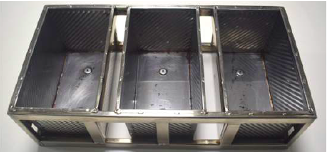
Recently, ISSDA was recognized by the International Stainless-steel Forum (ISSF) for developing innovative product applications in stainless-steel like bread moulds, e-rickshaws, fish cages, and a stainless-steel display van. This is also a testimony to the fact that stainless-steel applications in India have grown beyond traditional applications like kitchenware and tableware. Today, Indian stainless-steel products mirror the benchmarks of world class products and are being exported to critical markets like United States and European Union. ISSDA, along with the government agencies like BIS, has been successful in standardizing stainless-steel products and their respective usage. With key manufacturers as its members, ISSDA is emphasizing on the grass root level for skill development of fabricators and is also imparting hands-on training for selection of appropriate stainless-steel grades.
In the last three decades, the Indian infrastructural landscape has witnessed a vast transformation with stainless-steel increasingly being adopted for modern public applications. This includes railway bridges, foot over-bridges, benches, water coolers, bus stands, sinks, elevators, hand rails, gates, roofing, facade cladding, street furniture and sculptures, public dustbins, etc. Apart from this, mass transit infrastructure like airports, railway stations, subway stations, gateways, and transportation; structural applications like flyovers and bridges; heavy machinery and process industries are all relying on stainless-steel for a sustainable and longer life.
ISSDA has worked with the Indian government and has effectively advocated for the low life cycle cost of stainless-steel, which is now being mandated by the government across infrastructural projects. Apart from this, stainless-steel stands the sustainability test as it is ~100% recyclable and has minimal carbon footprint. Moreover, a longer life and an impressive end-of-life value are the two key parameters now being considered by architects and engineers for new project execution.
CE&CR: India ranks among the top 15 countries in the world in terms of per capita consumption of stainless-steel. Which sector has exhibited the maximum demand?
K K Pahuja: An increased per capita consumption of stainless-steel is the result of increased acceptance of the metal across diversified applications like Automobiles, Railways and Transport (ART); Architecture, Bridges, and Construction (ABC); process industry, pipes and tubes, and hollowware or white goods segments. However, hollowware segment continues to hold the lion’s share of stainless-steel demand in India, ranging between 40-45%. This includes tableware, kitchenware, cutlery, sinks, stoves, utensils, and similar products. The expected growth rate in this segment is nearly 7%. The share of this segment a decade ago was nearly 70%.
With a share of over 14% in the country’s stainless-steel demand, ABC (Architecture, Building, and Construction) sector is another major contributor in the per capita consumption of stainless-steel. Along with major projects like smart city development and highway construction, the sector also comprises applications like railings and gates, furniture (benches, chairs, tables, doors handles), decorative items (ornamental pipes & tubes, metal handicrafts), facades, etc., which are increasingly gaining prominence. This segment is now expecting a thrust, given the government’s renewed focus on infrastructure under the new National Infrastructure Pipeline (NIP), comprising projects like redevelopment of railway stations, metro projects, among other infrastructural developments. Stainless-steel reinforcement bars are also being explored in the construction sector.
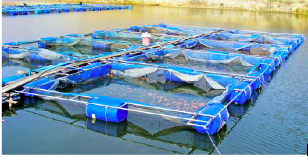
Fish Rearing Cage in Stainless Steel
CE&CR: Though India’s stainless-steel consumption level has reached 2.5 kg/capita in a short span of time, the domestic stainless-steel industry faces several challenges. Kindly shed some light on them, along with the suggested government measures to boost domestic manufacturing.
K K Pahuja: An international sentiment of trade protectionism has increased the dumping of stainless-steel products in India; be it United States’ section 232 or protectionist measures put up by the European Union. Additionally, the existing Countervailing Duty (CVD) and Anti-Dumping Duty (ADD) enforced by the Indian government on imports have been ineffective, with imports being on a consistent rise (as seen in the table below).
Source: Department of Commerce
Moreover, the existing ADD and CVD have led to a trade diversion via Free Trade Agreement (FTA) countries, specifically from ASEAN countries as shown in the table:
Source: Department of Commerce (figures in MT)
Consequentially, the domestic stainless-steel industry is bearing the brunt of under-priced imports and is operating at a mere 60-70% of its total installed capacity.
Apart from this, an import duty of 2.5% on key raw materials like Ferro-Nickel and stainless-steel scrap further pushes the input cost for the domestic players, distorting the model of a level-playing field with global peers. It is noteworthy that the Indian stainless-steel producers are equipped to manufacture world-class products. Moreover, the currently installed production capacity is sufficient to meet the domestic demand of stainless-steel.
Therefore, the challenges faced by domestic players need to be addressed immediately by the government. We are providing all support to the government on behalf of the industry. We now expect a prompt action by the authorities.
First Ever Stainless Steel e-Rickshaw Prototype |
|
CE&CR: Please tell us about the increase in the use of stainless-steel as a building material in the last decade.
K K Pahuja: Stainless-steel is the new-age solution for a sustainable infrastructure. The Architecture, Building, and Construction (ABC) segment constitutes ~20% of the total Indian stainless-steel demand. Over the last decade, the demand for stainless-steel in India has grown at 8-9% per annum. The metal is a key raw material for modern day infrastructure projects like redevelopment of railway stations, new highways, and metro projects. Further, stainless-steel rebars and plates are essential components of modern-day foot overbridges (FOBs) and road-over-bridges (ROBs). Transit buildings such as airports and metro rapid mass transport systems have been extensively using this metal for various applications such as bollards, column claddings, ticketing counters, escalators, lifts, handrails, canopies, etc. Apart from this, stainless-steel is also a key ingredient for pipe and tube applications in railings, furniture, decorative items, facades, etc. In this background, the government’s continuous boost towards infrastructure and a lofty investment of nearly Rs. 35,000 crore for capacity expansion and modernization by the domestic industry have uplifted the stainless-steel demand prospects for infrastructural projects.
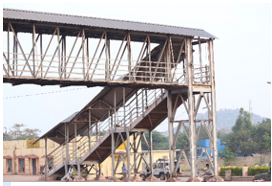
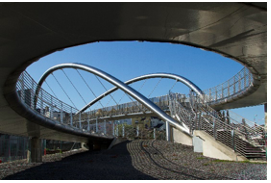
Stainless Steel for FOB Structures
CE&CR: Which segments do you see as growth drivers for the consumption of stainless-steel in the construction industry?
K K Pahuja: Cities in India are going through rapid urbanization with construction activities picking up. Stainless-steel demand is picking pace across segments such as hollowware, ABC segment, and railway infrastructures (like road-over- bridges, foot overbridges, benches, station redevelopment, etc.). The domestic players, along with ISSDA, have recently identified several key focus areas for stainless-steel usage to expand. Moreover, the promising National Infrastructure Pipeline project of the government is expected to harvest immense demand for stainless-steel on various fronts. Some of these are listed below:
- 65-70% requirement of energy infrastructure (including Thermal, Atomic, Renewable energy) in coastal areas will bank on stainless-steel for a sustainable and disaster-resilient setup.
- Demand from automobile segment for stainless-steel exhaust systems now that the BS VI norms have come into force from April 1, 2020.
- E-mobility market banks upon stainless-steel for effectively executing last mile connectivity transportation.
- The stainless-steel decorative pipes and tubes segment, currently growing at ~12% per annum, finds major applications in railings, furniture, decorative items, facades, etc.
- Stainless-steel is an effective and healthy alternative to the hazardous plastic for water solutions, leading to a better quality of life.
Stainless Steel for FOB Structures
CE&CR: Which segments do you see as growth drivers for the consumption of stainless-steel in the construction industry?
K K Pahuja: Cities in India are going through rapid urbanization with construction activities picking up. Stainless-steel demand is picking pace across segments such as hollowware, ABC segment, and railway infrastructures (like road-over- bridges, foot overbridges, benches, station redevelopment, etc.). The domestic players, along with ISSDA, have recently identified several key focus areas for stainless-steel usage to expand. Moreover, the promising National Infrastructure Pipeline project of the government is expected to harvest immense demand for stainless-steel on various fronts. Some of these are listed below:
- 65-70% requirement of energy infrastructure (including Thermal, Atomic, Renewable energy) in coastal areas will bank on stainless-steel for a sustainable and disaster-resilient setup.
- Demand from automobile segment for stainless-steel exhaust systems now that the BS VI norms have come into force from April 1, 2020.
- E-mobility market banks upon stainless-steel for effectively executing last mile connectivity transportation.
- The stainless-steel decorative pipes and tubes segment, currently growing at ~12% per annum, finds major applications in railings, furniture, decorative items, facades, etc.
- Stainless-steel is an effective and healthy alternative to the hazardous plastic for water solutions, leading to a better quality of life.
by Sawon Banerjee | Apr 19, 2020 | Interviews